Email Marketing
Clearwell builds and manages email marketing programs that grow your list, deliver the right message at the right moment, and turn your audience into a reliable, compounding revenue channel.
Email Marketing Services
For every dollar invested in email marketing the average business generates between $36 and $45 in return. No other marketing channel consistently delivers that ratio. Clearwell builds and manages email marketing programs that grow your list, deliver the right message at the right moment, and turn your audience into a reliable, compounding revenue channel.
- List Growth
- Segmentation Strategy
- Automated Nurturing
- Lifecycle Email Architecture
- Deliverability & Placement
- Performance Reporting
Most Businesses Are Sitting on an Email List They Aren't Using
You have an email list. Maybe it has a few hundred contacts. Maybe a few thousand or more. People who gave you their email address because they were interested enough in what you do to invite you into their inbox, which is one of the most valuable permissions a potential customer can grant a business.
And most businesses are doing almost nothing with it.
Not because they don't know email marketing is valuable. Not because they don't intend to do something with it. But because building an email program that is consistent, strategic, and genuinely useful to the people on the list feels overwhelming — so it keeps getting pushed to next week, next month, next quarter. Meanwhile the list sits idle, growing gradually colder, and the revenue it could be generating continues going unrealized.
When businesses do send emails they tend to fall into one of two failure modes. The first is the blast-and-pray approach — an occasional promotional email sent to the entire list whenever there is something to announce, with no strategy, no segmentation, no testing, and no real understanding of whether it is working. The second is over-automation without strategy — a welcome email and then nothing, or a sequence of generic nurture emails that nobody reads because they are not relevant to where the recipient actually is in their relationship with the business.
Email marketing done correctly looks completely different. It's a strategically designed system built around your specific customer journey that delivers the right message to the right person at the right moment automatically, grows in sophistication over time as data accumulates, and generates a measurable, attributable return that compounds with every new subscriber added.
That is what Clearwell builds.
What Clearwell's Email Marketing Services Include
Every email marketing engagement starts with an audit of your current list health, platform setup, existing automations, and deliverability — before any new campaigns or sequences are built.
Email Marketing Audit & Strategy
A comprehensive review of your current email program — list health and segmentation, platform configuration, existing automation sequences, recent campaign performance, deliverability metrics, and subscriber engagement. We identify exactly what is working, what is broken, and what is missing — and build a strategic roadmap that prioritizes the highest-impact improvements in the right sequence. For businesses starting from scratch we develop the complete email marketing strategy before building anything.
Email Platform Setup & Configuration
Whether you are setting up an email platform for the first time or migrating from one platform to another we configure your email marketing infrastructure correctly from the start — list structure, segmentation architecture, sending domain authentication, DKIM and SPF configuration, unsubscribe management, and the technical foundations that determine whether your emails land in inboxes or spam folders. Most email deliverability problems are caused by incorrect platform configuration — and fixing them before building campaigns saves significant time and lost revenue down the road.
List Growth Strategy
An email list that is not growing is slowly dying — unsubscribes, bounces, and disengagement gradually erode list quality over time. We develop list growth strategies tailored to your business and audience — lead magnet development and promotion, opt-in form optimization, website capture sequences, social media list building, and the content upgrade strategies that attract subscribers who are genuinely interested in what you offer rather than just collecting email addresses.
Segmentation & Personalization Architecture
The most effective email marketing treats different subscribers differently based on who they are, where they came from, and how they have engaged with your business. We design segmentation architectures that allow your email program to deliver genuinely relevant messages to each audience segment — new subscribers versus long-term ones, leads versus customers, engaged subscribers versus those at risk of churning, and any other segments meaningful to your specific customer journey.
Campaign Strategy & Management
Strategic planning and execution of your ongoing email campaigns — newsletters, promotional sends, announcement emails, educational content, event invitations, and seasonal campaigns. We develop the content calendar, write the copy, design the email structure, segment the audience, set up the send, and report on the results. Every campaign is sent with a specific objective, a defined audience, and a clear metric for success — not just content filling a calendar slot.
Automation & Nurture Sequence Development
The automated email sequences that deliver the right message at the right moment without any ongoing manual effort — triggered by subscriber behavior, lifecycle stage, or time elapsed since a specific action. We design, write, and build automation sequences for every stage of your customer journey — from first subscription through initial purchase through repeat customer through long-term advocate. These sequences work around the clock generating engagement and revenue while you focus on running your business.
Deliverability Optimization
The most carefully crafted email is worthless if it lands in the spam folder. Email deliverability — the percentage of your sends that actually reach the inbox rather than spam or promotions — is determined by sending domain reputation, authentication configuration, list hygiene, engagement rates, and content quality signals. We audit your deliverability health, implement the technical fixes that improve inbox placement, and establish the list hygiene practices that protect your sender reputation over time.
Email Analytics & Performance Reporting
Monthly reporting on your email program performance — open rates, click rates, conversion rates, revenue attribution, list growth, unsubscribe rates, and deliverability metrics — with plain-English interpretation of what the numbers mean and specific actions planned for the coming month. We track your email performance against industry benchmarks and against your own historical baseline — identifying trends, opportunities, and warning signs before they become significant problems.
The Email Automations That Run Your Marketing While You Sleep
Email automation is the difference between an email program that requires constant manual effort and one that generates revenue around the clock without ongoing intervention. Here are the core automations Clearwell builds for every client engagement and the specific business impact each one delivers:
Welcome sequence. The most important automation in your entire email program. A new subscriber is at their peak interest in your business at the moment they subscribe — and a strategic welcome sequence capitalizes on that interest by introducing your brand story, demonstrating your expertise, addressing common questions and objections, and making a compelling first offer. A well-designed welcome sequence converts subscribers into customers at rates two to three times higher than cold broadcast campaigns — and sets the tone for the entire subscriber relationship that follows.
Lead nurture sequence. For businesses where the purchase decision takes time — consulting, professional services, high-consideration purchases — a lead nurture sequence delivers consistent value over the weeks or months between first contact and purchase decision. Each email in the sequence advances the relationship — building familiarity, demonstrating expertise, addressing specific objections, and keeping your business top of mind when the prospect is ready to move forward. Businesses with deliberate nurture sequences close significantly higher percentages of leads than those relying on manual follow-up alone.
Abandoned cart sequence. For eCommerce businesses the abandoned cart sequence is typically the single highest-ROI automation available. With 70% to 80% of shopping carts abandoned before purchase a three-email sequence sent over 24 to 48 hours after abandonment recovers a meaningful share of that lost revenue — often generating 5 to 15 percent of total store revenue from traffic that had already demonstrated purchase intent.
Post-purchase sequence. What happens after the first purchase determines whether that customer becomes a repeat buyer or a one-time transaction. A strategic post-purchase sequence delivers order confirmation and shipping updates, product use guidance that ensures a successful first experience, a review request at the optimal moment in the customer journey, and a cross-sell or replenishment offer timed to the natural purchase cycle — systematically building the customer relationship that produces long-term retention.
Re-engagement campaign. Every email list accumulates inactive subscribers over time — people who joined and stopped engaging but have not unsubscribed. These subscribers drag down your engagement metrics, hurt your deliverability, and represent a pool of potential customers who have simply gone quiet. A systematic re-engagement campaign with a compelling reason to return recovers a meaningful percentage of these subscribers while identifying the genuinely uninterested for removal — improving list quality, engagement rates, and deliverability simultaneously.
Anniversary and milestone sequences. Emails triggered by subscriber milestones — subscription anniversary, customer anniversary, birthday, product purchase anniversary — that recognize the relationship and create natural moments for offers, referral requests, and loyalty rewards. These emails generate disproportionately high engagement because they feel personal rather than promotional — and the sense of recognition they create is one of the most powerful relationship-building tools in an email marketer's toolkit.
Why Your Email Deliverability Determines Everything
You can have the best subject lines, the most compelling copy, and the most strategic automation sequences in your industry — and none of it matters if your emails are landing in spam folders rather than inboxes. Deliverability is the invisible foundation of every email marketing program and the most commonly neglected element.
Email deliverability is determined by a complex set of signals that inbox providers use to evaluate the trustworthiness and relevance of every email before deciding where to deliver it. Understanding and managing these signals is not optional — it is the prerequisite for everything else in your email program working as intended.
Sending authentication. SPF, DKIM, and DMARC records are the technical credentials that prove to inbox providers that your emails are legitimately sent from your domain rather than spoofed by spammers. Incorrect or missing authentication is one of the most common causes of inbox placement problems — and one of the easiest to fix when you know what to look for.
Sender reputation. Every email address and sending domain accumulates a reputation based on historical sending behavior — spam complaint rates, bounce rates, engagement rates, and sending volume patterns. A damaged sender reputation suppresses deliverability globally — not just for problematic campaigns but for all future sending from that domain. Protecting and improving sender reputation requires consistent attention to list hygiene, engagement-based segmentation, and complaint rate management.
List hygiene. An email list full of invalid addresses, spam traps, and chronically unengaged subscribers will generate high bounce rates and low engagement rates — both of which signal to inbox providers that your sending is low-quality and should be filtered. Regular list hygiene — removing hard bounces, suppressing chronic non-openers, and validating suspicious addresses — is a routine maintenance requirement for any healthy email program.
Engagement rates. Inbox providers increasingly use subscriber engagement — open rates, click rates, reply rates — as a signal of email quality. Emails that consistently generate high engagement are rewarded with better inbox placement. Emails that are consistently ignored are moved to spam or promotions. This creates a virtuous cycle for well-managed programs — good content generates engagement, engagement improves deliverability, better deliverability generates more engagement.
Email Marketing Strategy by Business Type
Effective email marketing looks different for different types of businesses — the right strategy, the right automation architecture, and the right content approach depend heavily on what you sell, how your customers buy, and what the customer relationship looks like over time.
Service Businesses & Professional Services
For service businesses email marketing is primarily a relationship and trust-building channel — nurturing leads through longer consideration periods, maintaining visibility with past clients who may need services again, and generating referrals through systematic engagement with your professional network. The most important automations for service businesses are lead nurture sequences and re-engagement campaigns. Campaign content should demonstrate expertise and deliver genuine value — not just promotional messaging.
eCommerce Businesses
For eCommerce businesses email marketing is a direct revenue channel — the abandoned cart sequence, post-purchase sequence, and promotional campaign calendar are the highest-priority investments. Email revenue attribution is direct and measurable — you can see exactly how much revenue each campaign and automation generates. Klaviyo is our recommended platform for eCommerce email due to its deep integration with Shopify and its sophisticated behavioral trigger capabilities.
B2B Businesses
For B2B businesses with longer sales cycles and multiple stakeholders email marketing is the most cost-effective way to maintain consistent presence throughout a consideration period that may span months. Lead nurture sequences need to be longer, more educational, and more sophisticated than B2C sequences — building the expertise credibility and business case that B2B purchase decisions require. Segmentation by industry, company size, and buying stage is particularly important for B2B email effectiveness.
Local Service Businesses
For local businesses serving a specific geographic community email marketing builds the community relationships and top-of-mind presence that drive repeat business and referrals. Local content — community events, seasonal relevance, local market insights — performs significantly better for local audiences than generic national-brand style content. Review request sequences and referral campaigns are particularly high-value for local service businesses.
Email Marketing Services Are Right for Your Business If...
- You have an email list that you're not consistently or strategically using to generate business
- You're sending occasional blast emails without a clear strategy, segmentation, or understanding of what is working
- You have an email platform you're paying for but using at a fraction of its capability
- You want to build a marketing channel that generates revenue without paying per click every time
- You're an eCommerce business that wants to implement the automation sequences that recover abandoned carts and retain customers
- You're a service business with a longer sales-cycle and want a systematic way to nurture leads without manual follow-up
- You have experience deliverability issues – low open rates, spam folder placement, or unexpected unsubscribe spikes – and want to understand and fix them
- You have no existing email lists or CRM for your marketing and want to implement them
Why Choose Clearwell for Your Email Marketing
Email marketing is one of the disciplines where the quality of the strategy and the quality of the writing determine the outcome more than any technical factor. A technically perfect email automation sequence that delivers generic, uninspired content will underperform a simpler sequence written with genuine understanding of the audience and compelling copy at every touchpoint.
Clearwell approaches email marketing as a combination of strategy, copywriting, and data analysis — because all three are required to build a program that performs at the level email marketing is capable of. The strategy determines what to send and when. The writing determines whether subscribers engage with it. The data determines what to change and what to keep.
Cameron – Clearwell's founder and a former marketing executive with over 18 years of experience — leads every email marketing engagement personally. Every automation sequence, every campaign calendar, and every performance report reflects a deep understanding of customer psychology, buying behavior, and the specific business outcomes your email program should be driving — not generic best practices applied without context.
We also approach email marketing with an unusual degree of honesty about what works and what does not. Email volume for its own sake is not a strategy. Sending more emails to more people more often is not inherently better — and in many cases actively harms deliverability and list health. Every recommendation we make is oriented around what will actually generate more revenue and build a stronger subscriber relationship — not what will make the metrics dashboard look impressive.
Frequently Asked Questions – Email Marketing Services
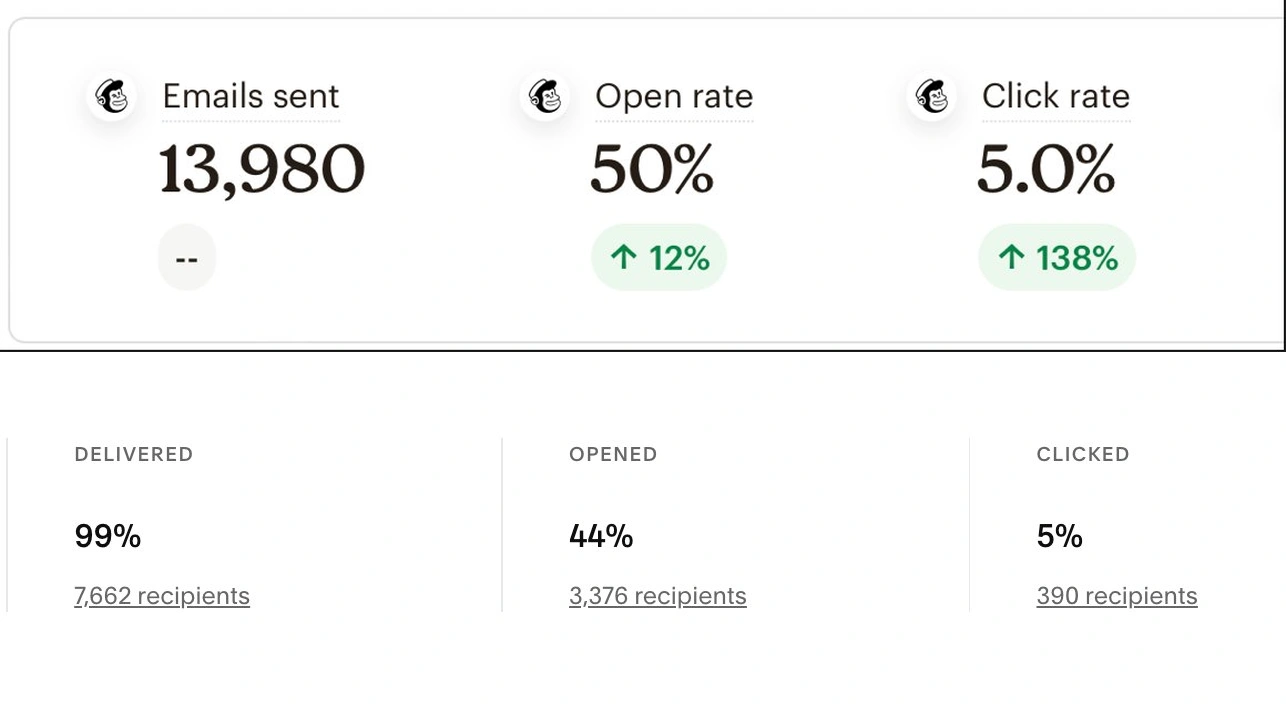
While our service generally produces results above 40%, average email open rates vary significantly by industry — typically ranging from 15 to 35 percent across most B2B and B2C categories. Rather than targeting a generic industry benchmark Clearwell establishes your current baseline open rate and identifies the specific factors suppressing it — subject line quality, sender name recognition, list engagement health, send time optimization, and segmentation relevance. Consistent improvement from your own baseline is more meaningful than hitting an industry average that may reflect very different audience and content types.
The right email frequency depends on your audience expectations, your content quality, and your business type. Sending too infrequently — less than once per month — allows subscribers to forget who you are and why they subscribed, increasing spam complaints and unsubscribes when you do send. Sending too frequently — daily or multiple times per week without sufficient content quality and relevance — accelerates list fatigue and unsubscribe rates. For most service businesses a weekly or bi-weekly cadence with high-quality content is the right balance. For eCommerce businesses promotional frequency can be higher when content is genuinely relevant and offer-based. We establish specific frequency recommendations after understanding your audience and content capabilities.
Platform recommendation depends on your business type and needs. Whether an E-commerce businesses or a service based business we can implement any platform based around your needs – from sophisticated automation capability at a reasonable price point, or businesses already using a specific CRM. We provide specific platform recommendations after understanding your situation rather than defaulting to a single platform regardless of fit.
Email segmentation is the practice of dividing your list into groups based on shared characteristics — demographic data, behavioral data, lifecycle stage, purchase history, engagement level, or any other meaningful attribute — and sending different messages to different groups based on their specific situation. Segmentation matters because relevance drives engagement. An email that speaks directly to where a specific subscriber is in their relationship with your business will consistently outperform a generic blast sent to your entire list. Segmented campaigns generate on average 14 percent higher open rates and 100 percent higher click rates than non-segmented campaigns — and the impact on conversion rates is even more significant.
SPF, DKIM, and DMARC are email authentication protocols that verify to inbox providers that your emails are legitimately sent from your domain rather than forged by spammers. SPF specifies which mail servers are authorized to send email on behalf of your domain. DKIM adds a cryptographic signature to your emails that verifies they have not been tampered with in transit. DMARC tells inbox providers what to do when an email fails SPF or DKIM authentication — reject it, quarantine it, or allow it. All three should be correctly configured for every business sending marketing email. Missing or incorrect authentication is one of the most common causes of deliverability problems and one of the easiest to fix. We audit and correct authentication configuration as a standard part of every email marketing engagement.
Email marketing ROI is measured differently for different business types. For eCommerce businesses direct revenue attribution is available — most email platforms track revenue generated from each campaign and automation sequence by following subscribers who click through to purchase. For service businesses direct revenue attribution is less straightforward — we track form submissions, booking completions, and other conversion events driven by email clicks, and attribute pipeline value to email-sourced leads. We also track list growth, engagement rate trends, and list health metrics that indicate the long-term value trajectory of the email channel.
Yes. Email platform migrations require careful planning to preserve list data, segmentation, automation logic, and sender reputation. We manage the full migration process — exporting and cleaning list data, mapping fields between platforms, rebuilding automation sequences in the new platform, reconfiguring sending authentication, and planning the warm-up sending strategy that protects deliverability during the transition. Platform migrations done without proper planning frequently result in deliverability problems that can take months to recover from — which is why we approach them methodically rather than rushing the process.
A basic email marketing setup — platform configuration, welcome sequence, and initial campaign template — typically takes two to three weeks. A comprehensive program including full automation architecture, segmentation setup, lead magnet integration, and complete lifecycle sequence development typically takes four to eight weeks depending on the complexity of your customer journey and the number of sequences being built. Ongoing campaign management begins immediately after the foundation is in place.

Your Email List Is Worth More Than You're Getting From It
Every subscriber on your list is a potential customer who gave you permission to reach them directly. Most businesses are leaving that value unrealized. Book a free email marketing audit or strategy call and find out exactly what your current program is (or isn’t) doing for your business.
